
Most therapists learn about EMDR in bits and pieces, maybe during grad school or through a colleague’s quick explanation. But when it comes time to actually use it with clients, that patchy knowledge can leave you second-guessing yourself.
EMDR isn’t just a technique, it’s a full treatment framework. And the eight phases aren’t just boxes to check off. They’re practical steps designed to keep therapy safe, focused, and grounded in the present moment. For many clients, this structure is what allows them to finally process what felt impossible for years.
8 Phases of EMDR Therapy
The eight phases of EMDR therapy give structure to trauma treatment. They help the therapist understand where the client is in the healing process and ensure that therapy progresses safely and effectively.
Each phase has a purpose, from getting to know your client’s history to supporting them in reducing distress tied to past events.
Here’s how it works.
Phase 1: History-Taking & Treatment Planning

This phase is all about getting the full picture. The therapist gathers a detailed history to understand what the client has been through and what symptoms are showing up today.
The therapist also identifies possible target memories for reprocessing. These might include traumatic events, specific triggers, or recurring beliefs that keep the client stuck. This is where the work begins, and the treatment plan starts to take shape.
Target selection can look different in specialized applications. In the DeTUR EMDR protocol, for example, treatment commonly begins with present triggers and urge states associated with addictive or dysfunctional behaviors.
Phase 2: Preparation
Now it’s time to build trust and make sure the client feels ready. In this phase, the therapist explains how EMDR works and introduces calming strategies the client can use throughout the process.
Clients might practice breathing exercises or create a mental “safe place” they can return to if they feel overwhelmed. The goal is to ensure the client can stay inside their window of tolerance as they begin to explore difficult material.
Phase 3: Assessment
In the assessment phase, the therapist and client choose one specific memory to focus on. Together, they identify:
- A clear image that represents the memory
- A negative belief tied to it
- A positive belief the client would rather believe
- Emotions and body sensations that come up when recalling the memory
The client then rates the memory using two simple tools: the SUDS scale (to rate distress) and the VOC scale (to rate how believable the positive belief feels). These tools help measure change over time.
Phase 4: Desensitization (Most Recognizable Phase)
This is the phase many people associate with EMDR. While focusing on the target memory, the client follows the therapist’s hand with their eyes or uses another form of bilateral stimulation, like tapping or tones.
The memory starts to shift. Clients often report new insights or emotions. Sometimes, the original image loses its emotional charge. The therapist guides the process gently, helping the client stay grounded and present.
Continue Your Learning
Recommended Courses
Phase 5: Installation
Once the distress has gone down, the therapist helps the client focus on the positive belief they chose earlier, something like “I am safe now” or “It wasn’t my fault.”
Through more bilateral stimulation, this belief is strengthened. It becomes more than just a thought, it starts to feel real.
Phase 6: Body Scan
Even if the distress feels lower, trauma can still leave a mark on the body. During the body scan, the therapist asks the client to notice any remaining tension, discomfort, or sensations related to the memory.
If anything comes up, the therapist helps the client process it using the same EMDR techniques until the body feels calm.
Read more: EMDR vs Talk Therapy
Phase 7: Closure
Each session ends with closure, even if the memory wasn’t fully processed. The therapist helps the client return to the present moment using grounding techniques.
This phase also includes reviewing coping tools, encouraging journaling, or talking through what to expect between sessions. It’s a chance to check in and support the client’s emotional safety.
Phase 8: Reevaluation
At the start of the next session, the therapist and client revisit the previous memory to see how it feels now.
If the client still feels distressed, the therapist may return to earlier phases. If not, they may move on to another target. This phase helps track long-term progress and adjust the treatment plan as needed.
Read more: compare EMDR with Prolonged Exposure therapy
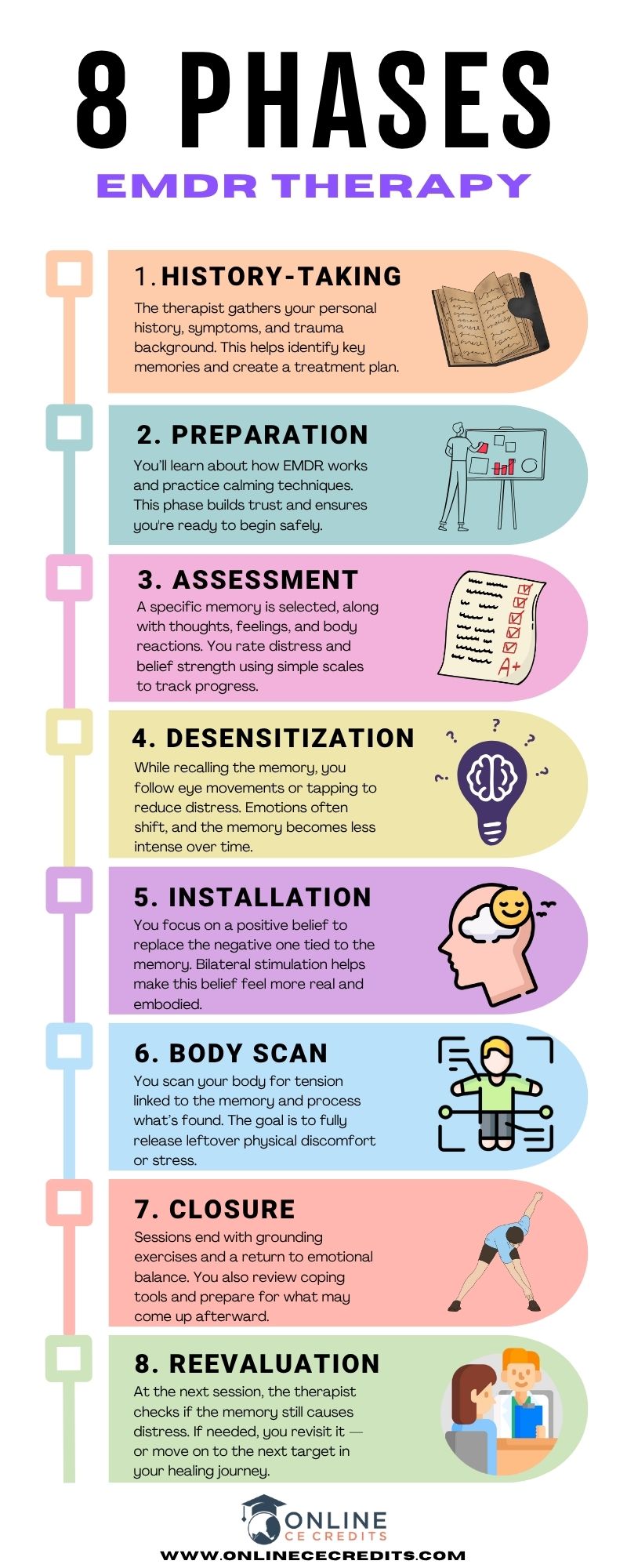
8 Phases of EMDR Therapy (INFOGRAPHIC)
Why Choose Online CE Credits EMDR Courses?
At Online CE Credits, EMDR training is grounded in real clinical practice, not just theory. We offer two practical certification programs designed to help licensed mental health professionals build EMDR skills confidently and affordably.
Our EMDR courses include:
- Structured training in all 8 phases of EMDR therapy
- Lifetime access to materials so you can review any time
- Four hours of included consultation to help apply what you learn
- No ongoing fees or “renewals” required
We believe that clinicians should feel equipped to use EMDR without jumping through expensive or confusing hoops. Our programs are independent, flexible, and built for working professionals.
Looking to deepen your skills in trauma treatment?
Explore our Foundational EMDR Therapy Certificate (EMDRPT-I) and Advanced EMDR Therapy Certificate (EMDRPT-II) programs today—and start building confidence with the 8 phases of EMDR in your own clinical work.
Read more: Is EMDR Worth It?
FAQ
Why Is There a Controversy With EMDR?
Some debate around EMDR stems from its use of bilateral stimulation, which is different from other therapies. While the exact mechanism is still being studied, decades of research have shown EMDR can lead to significant symptom reduction in clients with PTSD and trauma histories.
What Not To Do After EMDR?
After EMDR, clients should avoid high-stress situations when possible. Some clients feel emotionally tired or experience vivid dreams. Encourage clients to practice grounding techniques and get rest.
Do Patients Cry During EMDR?
Yes, it’s common. EMDR often brings up strong emotions. Crying is a natural part of releasing trauma and doesn’t mean something has gone wrong, it can actually signal movement and healing.
How Does EMDR Rewire the Brain?
EMDR may support changes in how the brain stores and processes traumatic memories. As clients reprocess memories while staying present, those memories can shift from being emotionally charged to feeling more distant and neutral.
