
Anxiety shows up often, and not just in the clients. Most therapists have worked with worry, avoidance, racing thoughts, and panic more times than they can count. It is one of the most common struggles people bring into the room.
That is why the way we treat anxiety matters. More than ever, clients want something that feels practical, honest, and effective. Acceptance and Commitment Therapy (ACT) gives therapists a way to offer that, without promising a quick fix.
You will find a clear breakdown of how ACT works for anxiety, how it supports different clients, and how to start using it.
What Is ACT Therapy and Why Does It Matter for Anxiety Treatment?
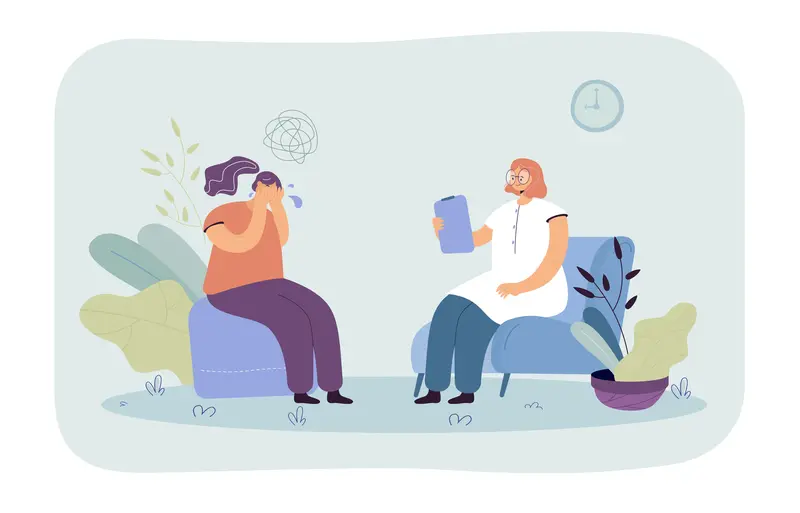
Acceptance and Commitment Therapy (ACT) is a form of cognitive behavioral therapy. It helps individuals reduce psychological suffering by accepting internal experiences rather than avoiding them, and by committing to actions that align with personal values. ACT therapy for anxiety teaches clients to notice thoughts without judgment and to respond with purpose, not fear.
The model is based on six core processes, including mindfulness, defusion, and values clarification. These processes help anxious individuals shift from trying to eliminate distress to building a meaningful life in its presence.
ACT is not just about getting rid of anxiety, but changing the relationship with it. The acronym stands for:
- Accept thoughts and feelings
- Choose a valued direction
- Take action
Clinicians interested in learning how to apply these principles in therapy can explore our CE-approved course:
👉 ACT for Anxiety: Necessary Tools to Defeat Anxiety With Welcome Acceptance & Flexibility
The Six Core Processes of ACT in Anxiety Treatment
Each of ACT’s six components builds on the others. Together, they help anxious clients shift from resistance to willingness, from fear-based avoidance to values-based action.
For a deep dive into each process, see our course:
👉 ACT in Exploration & Application: Uncloaking the 6 Tenets of Complete Healing
1. Cognitive Defusion
Defusion techniques help clients observe thoughts instead of being controlled by them. Rather than challenging a thought like “I will panic if I leave the house,” ACT teaches the client to say, “I am having the thought that I will panic.”
This small shift creates distance between the thought and the self. Strategies like naming the story (“Here’s the ‘I’ll panic’ story again”) reduce the literal power of anxious thinking and improve psychological flexibility.
2. Acceptance
Avoidance can keep anxiety in place. ACT encourages clients to make space for discomfort and shift away from the futile effort to control internal experiences.
Therapists guide clients to notice sensations, label feelings, and allow them to be present, without needing them to go away first.
This is not resignation. It is willingness.
3. Present Moment Awareness
Grounding techniques and mindfulness practices support anxious clients in staying in the here and now. This helps reduce rumination about the past or future and improves regulation in moments of distress.
Simple tools like breath awareness or guided sensory noticing can help anchor attention.
4. Self-as-Context
Anxiety often fuses with identity: “I am an anxious person.” ACT helps clients experience themselves as more than their thoughts or emotions.
Using metaphors and experiential exercises, clinicians teach clients to relate to the part of them that notices, not just the part that feels afraid.
This opens space for growth.
5. Values Clarification
Helping clients identify what really matters to them brings purpose back into the session. For anxious clients, reconnecting with values like connection, honesty, or learning creates motivation to tolerate discomfort in service of a larger goal.
Values are not goals. They are directions.
6. Committed Action
Therapists work with clients to take small, consistent steps toward their values, even when anxiety shows up.
By reinforcing behavior that aligns with meaning, clients begin to experience themselves as capable and in control, not because anxiety is gone, but because they are choosing to move anyway.
ACT on Anxiety Disorders

Studies show that increasing psychological flexibility, ACT’s core mechanism, is linked with reduced anxiety symptoms across multiple diagnoses.
ACT interventions for anxiety can be tailored to different diagnostic categories. While the core principles remain the same, the strategies adapt based on how anxiety shows up.
Here is a quick breakdown of how ACT can support treatment across common disorders:
| Anxiety Disorder | ACT Techniques and Strategies |
| Generalized Anxiety Disorder (GAD) | Uses mindfulness, defusion, and values to shift attention away from worry. Encourages observing thoughts without control strategies. |
| Panic Disorder | Normalizes bodily sensations. Helps clients accept panic symptoms and separate from catastrophic thoughts. Includes interoceptive exposure and values-based planning. |
| Social Anxiety Disorder | Focuses on values like connection and self-expression. Encourages gradual exposure to social situations while practicing mindfulness and acceptance. |
| Specific Phobias | Pairs exposure with defusion. Helps clients notice fears without over-identifying. Values-driven action replaces avoidance. |
As noted by Hayes et al. (2006), ACT enhances mental flexibility and teaches people to see thoughts as experiences, not facts. Research shows that ACT reduces anxiety severity and avoidance, even in clients who do not respond to other methods.
Why ACT Resonates with Today’s Clients
Most clients today are tired of being told to “just change their thinking.” They have tried that already. For many, especially those with long-term anxiety, trying to fix or get rid of anxious thoughts only makes things worse.
ACT offers a different approach, one that feels more human.
Instead of focusing on control, ACT teaches clients how to live better with anxiety. It helps them stop the fight and start building a life that matters, even when fear is still present. That shift alone can feel like a relief.
After COVID, more clients are struggling with uncertainty, loss, and burnout. They are not always looking for symptom reduction. They are looking for something that helps them function again, at work, at home, in their relationships. ACT gives them a way to do that.
It is also a flexible model. Clients do not need to be “into mindfulness” or “open to deep work” from day one. ACT meets them where they are and gives them tools they can actually use, like breathing through panic or stepping into a hard conversation because it aligns with their values.
ACT vs. CBT for Anxiety: A Quick Comparison for Clinicians
A meta-analysis by Öst, L.G. found ACT and CBT offer similar success rates for anxiety disorders, though the mechanisms differ. Both are evidence-based therapy for anxiety, and both are supported by robust research. The best choice depends on client fit, therapist training, and clinical goals.
| Approach | Core Focus | Anxiety Strategy | Client Fit |
| CBT | Thoughts and beliefs | Challenge and restructure anxious thoughts | Clients who prefer structure and cognitive strategies |
| ACT | Relationship to thoughts | Accept, defuse, and take values-based action | Clients open to mindfulness and experiential work |
For those interested in using both, integrated models are emerging. Many clinicians combine ACT’s flexibility with CBT’s structure.
Learn more with our course:
👉 ACT Advanced Strategies to Increase Psychological Flexibility: Case Conceptualizations
How to Start Using ACT with Anxious Clients Today

Therapists can begin introducing ACT concepts in small ways. Metaphors are a great entry point:
- Tug of War with Anxiety: Holding the rope keeps anxiety strong. Letting go weakens its grip.
- Passengers on the Bus: Anxiety is just one voice on the ride. You are the driver.
Sample prompts:
- “What does this thought try to protect you from?”
- “If anxiety were not in charge, what would you do next?”
- “What value is hiding beneath this fear?”
Client worksheets, mindfulness scripts, and experiential exercises are easy to integrate into existing sessions.
Want to go deeper? Take our ACT for Anxiety course for CE credit and real-world techniques.
ACT Therapy Training & CE Opportunities for Counselors
For therapists looking to offer ACT therapy for anxiety in practice, CE training is essential. ACT can seem simple on paper, but clinical skill comes from seeing it in action.
Quality CE courses for ACT therapy should include:
- Evidence-based frameworks
- Real case examples
- Tools for different client populations
- Support for ethical integration
Online CE Credits offers multiple ACT courses designed by licensed professionals, including our full credentialed ACT certification.
Explore targeted training for diverse needs:
Each course offers CE credit and lifetime access, allowing clinicians to grow their skills at their own pace.
