
A client can look fine in session, then go home and shut down for hours. They know what happened. They can explain the pattern. But inside, it still feels like two forces are pulling at once.
That push and pull is the exact problem IFS is trying to solve. Instead of debating the “right” feeling, it maps what is happening in the client’s inner world in real time.
Below, we explain what IFS therapy is, what parts actually mean in clinical work, and when it fits best.
What IFS Therapy Actually Is (Plain-English Explanation)
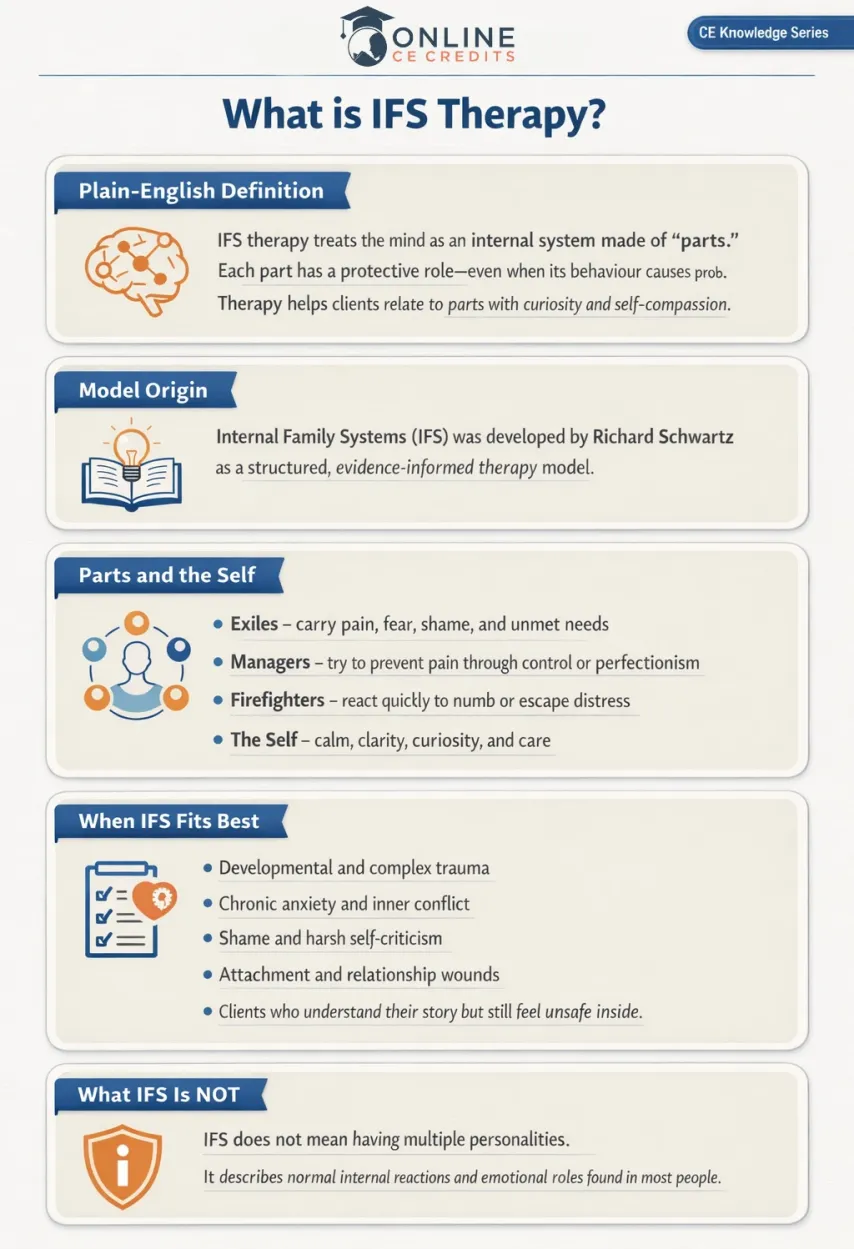
IFS therapy is a structured therapy model that treats the mind like an internal system made of “parts.” Each part has a job, even when its behavior causes problems.
In session, the therapist helps the client meet these parts with less fear and more self-compassion, so the person can respond with choice instead of panic.
This approach is called Internal Family Systems (IFS therapy), created by Richard Schwartz.
The Core Components of IFS (Parts + Self)
IFS is not saying someone has “multiple personalities.” It is saying most people have different inner reactions that can feel like different voices. The IFS model uses clear categories:
- Exiles: parts that carry emotional pain, fear, shame, and grief. They often hold multiple childhood trauma memories or unmet needs.
- Managers: parts that try to prevent pain. They may push perfectionism, control, overthinking, or people pleasing.
- Firefighters: parts that act fast when pain breaks through. They may numb, distract, shut down, binge, or rage.
- The Self: the core self, a steady state marked by calm, curiosity, clarity, and care. In IFS, the goal is self-leadership, not “getting rid” of parts.
What IFS Therapy Is Used For (And When It Fits Best)
IFS focuses on inner conflict patterns, not just symptom labels. It can be a strong fit when clients have insight, yet still feel stuck. It is often used in trauma and attachment work, and in family therapy settings, since parts often formed in relationships.
It is often a “best fit” approach for:
- Developmental and complex trauma
- Chronic anxiety and inner conflict
- Shame cycles and harsh self-criticism
- Attachment wounds affecting personal and intimate relationships
- Clients with difficult emotions that flip fast, or feel “too much”
- Clients who keep understanding the story, but still feel unsafe inside
IFS vs Traditional Talk Therapy (Why It Feels Different)

Traditional talk therapy can help a client explain what happened and name triggers. IFS often shifts the focus from “Why am I like this?” to “Which part is doing this, and what is it protecting?”
In many humanistic and psychodynamic therapy styles, the relationship and meaning are central, and insight is a big lever.
IFS still values the relationship, but it adds a step-by-step IFS process for working with inner protectors.
The therapist does not debate the part. The therapist gets curious about their role. Over time, clients often report more inner harmony because parts stop fighting for control.
Is IFS Therapy Evidence-Based and Trauma-Informed?

IFS has a growing research base, but it is not as large as CBT. The fairest way to say it is that the evidence is promising and still developing.
A review from the Australian Psychological Society describes IFS as a trauma-informed model that has been used across clinical settings, with early studies that suggest benefit for trauma-related symptoms.
There is also newer research looking at IFS concepts in relation to posttraumatic stress disorder and complex trauma symptoms in adults. One 2025 paper (survey design) examined IFS-informed concepts like parts and self-leadership in a large adult sample, linking these constructs to trauma symptom patterns.
What Therapists Should Know Before Using IFS
IFS is a full clinical model with fair pricing, not a casual parts exercise. A therapist needs more than a script. They need solid pacing, consent, and a plan for what happens when emotions spike.
Ethically, IFS use includes training and consultation, like other trauma approaches. This matters more with dissociation risk and complex trauma, where “going inside” too fast can flood an exile and trigger firefighter reactions.
That is also why many clinicians pursue IFS training through CE courses. It gives a clear pathway, with skills practice, feedback, and a place to ask hard case questions.
If you’re a clinician who wants a structured way to build confidence, our IFS courses on OnlineCECredits can support that growth.
FAQ
What is IFS therapy in simple terms?
Internal Family Systems therapy helps clients meet inner “parts” with curiosity, then lead with the calm Self. Symptoms often soften when protectors feel heard, not fought.
Is IFS only for trauma?
No. It is often used for trauma, but it also fits anxiety, shame, and inner conflict. It can help clients who feel stuck, even with good insight.
Can IFS be done online?
Yes, when privacy and safety are strong. Online sessions can work well for parts work, as long as the IFS therapist has a clear plan for grounding, pacing, and crisis steps.
How is IFS different from EMDR or CBT?
CBT targets thoughts and behavior patterns. EMDR targets distressing memories with a structured reprocessing method. IFS targets the inner system of parts and self-leadership. Read more: CBT vs. EMDR therapy
Do therapists need training to use IFS?
They should. IFS is structured, and trauma cases can get intense. Training and consultation help therapists pace safely, work with protectors, and handle dissociation risk.
What is IFS therapy used to treat?
It is used for mental health concerns like anxiety, shame, trauma symptoms, relationship patterns, and sometimes depressive symptoms, especially when inner conflict drives the cycle.
What is the IFS therapy controversy?
Some clinicians feel “parts language” can be misunderstood or used too loosely. Others debate the size of the research base. The safest stance is careful training and a clear scope.
What are the 6 steps of IFS therapy?
Many clinicians describe a flow like: notice a part, separate from it (unblend), get curious, learn its role, witness its burden, then support new choices. But the terms vary by training.
