loading...

by Jennifer Sweeton, PsyD, JD, MS, MA | Jul 9, 2024 | Industry Advice
Do you want to renew your psychology license without the stress of sifting through countless CE options?
Luckily, you can focus on what you do best, helping your clients, while confidently fulfilling your CE requirements with our hassle-free psychology license renewal programs.
Here’s what you need to know:
Key Highlights
1. Continuous education in psychology helps you adapt to mental health therapy changes and advance your skills in patient care.
2. Review your state’s specific requirements for psychology license renewal to avoid licensure lapses that disrupt your practice.
3. Online CE courses’ benefits include flexibility, diverse course offerings, expert instructors, cost-effectiveness, and interactive formats.
4. Choose an accredited online CE provider offering a range of courses, experienced instructors, and a user-friendly platform.
5. Keep records of completed CE activities, including certificates of completion, and submit renewal applications with the required fees on time.
Read on to discover how to satisfy your license renewal requirements while upgrading your counseling skills.
Why Continuous Education in Psychology Is Important
One study says continuous education (CE) allows healthcare professionals to adapt to society’s changes and to advance their skills and knowledge to offer optimal patient care.
So CE is more than a regulatory requirement; it’s a commitment to lifelong learning. This is because psychology is constantly evolving with new research, techniques, and ethical guidelines. CE courses enable psychologists to:
Stay Updated: Learn about the latest research findings, therapeutic techniques, and technological advancements.
Enhance Skills: Gain new competencies and refine existing skills to better serve clients.
Ensure Compliance: Fulfill state licensure requirements to maintain the validity of their professional licenses.
Expand Knowledge: Explore emerging areas of interest or specialty fields within psychology.
What You Need for License Renewal Requirements
Each state has its own specific requirements for license renewal, including the number of CE hours, the types of acceptable courses, and the frequency of renewal. Generally, the process involves:
Earning Required CE Credits: Psychologists must complete a designated number of CE hours within a specified period.
Documentation: Keep records of completed CE activities, including certificates of completion.
Renewal Application: Submit a renewal application along with proof of completed CE credits.
Fees: Pay any required renewal fees.
Don’t forget to find out your state’s specific requirements to avoid licensure lapses, which can disrupt your ability to practice.
What Are the Advantages of Online CE Courses?
Online CE training programs have become a popular choice among psychologists for several reasons. They offer flexibility, convenience, and access to a wide range of topics, making them an ideal solution for busy practitioners.

Flexibility and Convenience
Online CE certifications enable psychologists to learn at their own pace and on their own schedule. They’re perfect for those balancing a busy practice, family commitments, and personal interests. Mental health therapists can study during their most productive times since they can access material 24/7, anytime, anywhere.
Diverse Course Offerings
Online platforms provide an array of programs covering various psychology aspects, from clinical practice and ethical issues to new therapeutic techniques and special populations. This diversity helps psychologists choose courses that align with their interests and professional needs, improving their knowledge and practice.
Expert Instructors
Reputable online CE providers feature training programs from experienced and respected therapists in psychology. These instructors bring a wealth of knowledge and practical experience.
During seminars, attendees can gain insights into real-world issues that are theoretically sound and apply to the real world.
Cost-Effectiveness
Online CE courses are more affordable than in-person workshops or conferences. Additionally, they eliminate travel, accommodation, and other expenses associated with attending live events. Many online CE providers also offer package deals or subscriptions, providing further savings for multiple courses.
Interactive and Engaging Formats
Modern online CE certifications use different formats to enhance learning, including video lectures, interactive quizzes, case studies, and discussion forums. These engaging elements reinforce learning and ensure participants effectively apply new knowledge in their practice.
Accreditation and Quality Assurance
Trusted online CE providers run accredited programs that satisfy license renewal stringent standards. This accreditation guarantees high-quality courses whose credits are acceptable to state licensing boards.

How to Choose the Right Online CE Provider?
Finding the right online CE provider can be overwhelming since there are many. However, here are some key factors to consider when choosing a provider:
Accreditation
Be sure the provider is accredited by recognized organizations such as the American Psychological Association (APA) or state licensing boards. Accreditation confirms courses meet professional standards and can qualify for license renewal.
Course Offerings
Look for a provider that offers various psychology courses with several specialties. It becomes easy to find courses that match your interests and professional needs.
Instructor Expertise
Check the qualifications and experience of the course instructors. Ideally, they should be well-respected professionals with extensive experience in their respective fields.
User Experience
The platform should be user-friendly, with easy navigation and access to course materials. Additionally, look for features like progress tracking, automatic certificate generation, and customer support.
Reviews and Testimonials
Reading reviews and testimonials from other psychologists can provide valuable insights into the quality and effectiveness of the provider’s courses. Look for feedback on course content, instructor quality, and overall satisfaction.
Pricing and Value
Consider the cost of the courses and the value they provide. Ideally, a provider should offer competitive pricing, package deals, or subscription options Remember that the cheapest option is not always the best; quality and accreditation are paramount.
Start Your Journey to Continuing Professional Development
License renewal can be a hassle, but with the right approach and resources, it doesn’t have to be. Online CE courses offer a convenient, flexible, and effective way for psychologists to fulfill their CE requirements and stay ahead of the curve. Counselors can have a smooth, stress-free license renewal experience by choosing accredited, high-quality courses.
Embrace online learning in your professional development to continue providing the best possible care to your clients. Choose your online CE program today!
Have You Tried Online CE Credits?
Looking for a trusted provider? Online CE Credits offers extensive accredited courses from expert instructors. License renewal is a breeze because of the user-friendly platform and a commitment to quality. Stop searching for the perfect deal; enjoy an affordable membership plan now!

by Jennifer Sweeton, PsyD, JD, MS, MA | Aug 20, 2024 | Industry Advice
As a social worker in Michigan, staying current with your continuing education (CE) requirements is essential to maintaining your license and providing the best care to your clients. The social work landscape is ever-evolving, with new research, techniques, and ethical considerations continually emerging. As a result, Michigan’s requirements for Continuing Education Units (CEUs) enable practitioners to remain competent and up-to-date in their field.
This comprehensive guide will walk you through everything you need to know about meeting your Michigan Social Work CEU requirements, from understanding the basics to finding the best courses to meet your needs.

Understanding Michigan Social Work CEU Requirements
What Are CEUs?
Continuing Education Units (CEUs) are a standardized measure used to quantify the time spent on professional development and learning activities. In Michigan, 1 CEU is equivalent to 10 contact hours of participation in an organized continuing education experience under responsible sponsorship, capable direction, and qualified instruction.
Michigan Social Work Licensure Levels
Michigan offers three levels of social work licensure:
CEU Requirements by License Type
LBSW and LMSW:
- Total CEUs Required: 45 CEUs every three years.
- Ethics Requirement: At least 5 of these hours must be in social work ethics.
- Pain and Symptom Management: At least 2 hours must focus on pain and symptom management.
- Human Trafficking: A one-time, one-hour training on human trafficking must be completed.
RSST:
- Total CEUs Required: 20 CEUs every three years.
- Ethics Requirement: At least 5 of these hours must be in social work ethics.
- Human Trafficking: A one-time, one-hour training on human trafficking must be completed.
Newly Licensed Social Workers
If you’re newly licensed, your CEU requirements are prorated based on when you received your license within three years. For example, if you’re licensed within the first year of the cycle, you would need to complete the full 45 CEUs (or 20 for RSST). If licensed in the second year, you would need 30 CEUs, and in the third year, 15 CEUs.
Meeting the Ethics Requirement
Ethical practice is the cornerstone of social work. Michigan mandates that all licensed social workers complete at least 5 hours of continuing education in ethics. This is crucial, as ethical dilemmas can arise in various aspects of social work, including confidentiality, dual relationships, and informed consent.
Recommended Topics for Ethics CEUs
- Boundaries in Social Work: Understanding the importance of boundaries to maintain professional relationships.
- Ethical Decision-Making Models: Learning different approaches to making ethical decisions.
- Cultural Competence and Ethics: Addressing ethical considerations in working with diverse populations.
- Technology and Ethics: Navigating ethical issues related to the use of technology and social media in social work.
Finding Ethics CEU Courses
Many organizations offer ethics-specific CEUs, both online and in-person. Make sure the content is relevant and applicable to your practice by looking for courses tailored to the unique challenges that social workers face.
Pain and Symptom Management CEUs
Michigan requires that all licensed social workers complete at least 2 hours of CEUs focused on pain and symptom management. The program teaches you how to help clients manage physical pain, which is especially relevant if you’re working in healthcare settings, hospice, or with populations experiencing chronic pain.
Topics Covered in Pain and Symptom Management CEUs
Understanding Pain:
Types of pain (acute vs. chronic) and their impacts on mental health.
Pain Assessment Tools:
Learning how to assess pain levels accurately.
Intervention Strategies:
Techniques for managing pain, including psychological approaches such as Cognitive Behavioral Therapy (CBT) for pain management.
Multidisciplinary Approaches:
Collaborating with other healthcare providers to offer comprehensive pain management.
Future-Proof Your Social Work With Current CEUs
Need to ensure your license renewal and professional development are on track? Stay ahead of the curve with our comprehensive range of CE courses designed to develop your professional growth. Don’t let license renewal deadlines stress you out. Explore essential topics for social work professionals, including
The Human Trafficking Requirement
As a relatively new mandate, all social workers in Michigan must complete a one-time, one-hour training on human trafficking. This training aims to equip social workers with the knowledge to identify and intervene in cases of human trafficking.
What the Training Covers
- Understanding Human Trafficking: Definitions, types, and the scope of the problem
- Signs of Human Trafficking: How to Identify potential victims
- Intervention Strategies: What to do if you suspect someone is a victim of human trafficking
- Legal and Ethical Considerations: Understanding the laws surrounding human trafficking and your ethical obligations as a social worker
Where to Find Human Trafficking Training
The Michigan Department of Licensing and Regulatory Affairs (LARA) provides a list of approved human trafficking training programs. You can complete them online and usually fulfill the requirement in about an hour.
Choosing CEU Courses
When selecting CEU courses, it’s essential to consider the state’s requirements and your professional development goals. Here are some tips for selecting the best programs:
Accredited Providers
Always choose CEU courses from accredited providers. In Michigan, CEUs must be approved by the Michigan Social Work Continuing Education Collaborative. Courses from universities, professional associations, and recognized training organizations typically meet this standard.
Relevance to Your Practice
Pick courses relevant to your area of practice. For example, if you work primarily in clinical social work, courses on the latest therapeutic techniques or mental health trends would be beneficial. If you’re in a macro practice, policy development or organizational leadership certifications might be more applicable.
Course Format
Consider the format that works best for you, whether it’s in-person workshops, live webinars, or self-paced online courses. Online courses offer flexibility, allowing you to complete your CEUs at your convenience. On the other hand, in-person workshops can provide valuable networking opportunities and hands-on experience.
Cost and Time Investment
Compare the cost of courses and the time required to complete them. Some courses offer more CEUs for less time, but it’s essential to balance quantity with quality. Don’t just choose the cheapest option. Make sure the course content is valuable and applicable to your work.

Record Keeping and Reporting
Maintaining accurate records of your CEUs is crucial. You must keep documentation of your completed CEUs for at least four years after the end of the renewal period in case of an audit by the Michigan Board of Social Work.
What to Keep:
- Certificates of Completion: These should include the course title, date, number of CEUs earned, and the provider’s accreditation information.
- Course Descriptions and Objectives: Keep a copy of the course syllabus or description to show the relevance of the course content.
- Transcripts: If you completed CEUs as part of an academic course, maintain transcript copies.
Reporting Your CEUs
When it’s time to renew your license, you’ll report your CEUs through the Michigan Online License Application/Renewal Service (MiPLUS). You must attest to completing the required number of CEUs, including the specific hours in ethics, pain management, and human trafficking.
Renewal Process and Deadlines
Social work licenses in Michigan are renewed every three years. It’s important to keep track of your renewal deadline and ensure all CEUs are completed well before this date to avoid any last-minute stress.
Late Renewals
If you miss the renewal deadline, your license will lapse, and you may not legally practice until it is reinstated. Late renewals require you to pay additional fees and submit proof of CEU completion.
Stay Abreast With Michigan Social Work Laws
Meeting the Michigan Social Work CEU requirements is a regulatory necessity and a commitment to your professional growth and the well-being of your clients. Your social work practice will continue to be high-quality if you select appropriate CEU courses and keep careful records.
Staying on top of your continuing education requirements is essential, regardless of when you started your career or how much experience you have. This will let you maintain your license, enhance your skills, expand your knowledge, and ultimately improve your patients’ lives.
Try Battle-Tested Online CE To Meet Licensure Requirements
Relax, and don’t worry about your license renewal. With expert-approved Online CE, you can easily fulfill your continuing education requirements while staying up-to-date on the latest trends and best practices. Enroll today and experience the convenience and flexibility of our online courses.

by Tim Cassidy, MBA, MA, LPC | Oct 18, 2024 | Educational, Industry Advice
As a mental health professional, it’s natural to seek out training opportunities that enhance your skills without breaking the bank. Free resources are abundant, and they can be quite appealing when it comes to learning about various therapeutic approaches like Solution-Focused Therapy (SFT).
However, it’s essential to consider the benefits of investing in accredited courses, even when the free ones seem tempting.
The Appeal of Free Training and Its Limitations
Free online training can offer a quick overview and introduce key concepts, making them accessible to a wide audience. For practitioners just beginning their journey or those curious about different modalities, these resources might seem like a good starting point. However, they often lack depth, are not structured for professional development, and may not be created by experts in the field.

For practicing therapists, staying updated with evidence-based practices is not just about acquiring new knowledge. It’s about ensuring that your skills are in line with current standards, which ultimately affects the quality of care you provide to your clients. This is where accredited courses come in. They’re designed with a more rigorous approach, focusing on practical application, real-world scenarios, and feedback from experienced practitioners. For example, the SFT training program boasts instructors with decades of experience. Take a look at the course to ramp up your therapy skills.
Why Accreditation Matters?
Accredited courses are developed to meet the specific needs of professionals. They are often recognized by governing bodies, ensuring that the content is both relevant and up-to-date. Here’s why investing in these courses is beneficial:
Credibility and Recognition:
An accredited course provides a certificate that is recognized in the professional community. This credential is not just a piece of paper. It reflects a commitment to ongoing learning and adherence to professional standards. It can also be an essential requirement for renewing licenses or obtaining new ones in different states or countries.
Quality and Depth of Content:
Accredited training programs undergo a review process to ensure they meet certain standards. This typically means the content is more comprehensive, the instructors are qualified, and the material is based on the latest research. You’re not just learning what SFT is, but how to apply it effectively in various clinical settings.
Supervision and Feedback:
Many accredited programs offer opportunities for supervision or mentorship, something you won’t find in free courses. This one-on-one or group guidance can be invaluable in refining your approach, addressing challenges, and developing your unique therapeutic style.
Networking and Community:
Investing in a formal course often comes with the added benefit of connecting with other professionals in your field. This can lead to collaborative opportunities, professional support, and even friendships. The community aspect of learning should not be underestimated, as it provides a support system that can be crucial, especially in private practice settings.
The Practical Benefits for Your Practice
If you’re considering incorporating Solution-Focused Therapy into your practice, think about what kind of training will genuinely benefit your clients. Free resources might give you a brief overview, but they rarely equip you with the skills needed to handle the complexities of real client scenarios. On the other hand, accredited courses provide a structured pathway to mastery.
Here’s how they can make a tangible difference in your practice:
Increased Confidence:
With in-depth training, you’ll feel more confident in your ability to use SFT techniques effectively. This confidence translates into better client outcomes, as you’re more equipped to guide them through the therapeutic process with clarity and precision.
Better Client Outcomes:
When you’ve received training that’s grounded in evidence and best practices, it shows in your work. Clients benefit from techniques that have been tried and tested in clinical settings. You can help them navigate issues like complex trauma more efficiently, leading to quicker and more sustained results.
Professional Growth:
Accredited certifications often provide continuing education credits, which are necessary for maintaining your professional license. By doing so, you’re complying with regulatory requirements, growing as a therapist, keeping up with new developments, and continuously improving your skills.
Weighing the Costs
One of the biggest deterrents for many therapists when it comes to accredited courses is the cost. It’s understandable, these programs can be a significant financial investment. However, it’s essential to consider the long-term value of such an investment. It can also enhance your reputation, lead to more referrals, and increase your professional satisfaction and growth.

Also, many training organizations offer payment plans, scholarships, or sliding scale fees to make their courses more accessible. It’s worth reaching out to the providers to see what options are available. Remember, the goal is not just to add another certificate to your wall but to genuinely enhance your skills and effectiveness as a therapist.
Choosing from the Many Online Courses Available
The internet is flooded with online courses, and it can be overwhelming to choose the right one. Here are a few tips to help you make an informed decision:
Check the Instructor’s Credentials:
Look for courses taught by professionals who have extensive experience in Solution-Focused Therapy. It’s even better if they are still actively practicing, as they can provide relevant examples and up-to-date information.
Read Reviews and Testimonials:
See what other participants have to say about the course. Were they satisfied with the content? Did they feel it was worth the investment? Testimonials can give you a sense of what to expect.
Look for Interactive Elements:
Courses that include live sessions, Q&A opportunities, or peer discussions tend to be more engaging and effective. They allow you to clarify doubts and learn from others’ experiences, which can be invaluable.
Consider the Support Provided:
Good courses often offer additional resources like reading materials, case studies, and access to a community of learners. These extras can enhance your learning experience and provide ongoing support as you start implementing what you’ve learned.
Conclusion: Partner With Online CE Credits
While free Solution-Focused Therapy training resources can be a good introduction, they typically don’t offer the depth or quality needed for professional application. Accredited courses from Online CE Credits provide value that extends far beyond a single training session. They offer a structured path to mastering this therapeutic approach, ensuring that you’re equipped to deliver the best possible care to your clients. Investing in your education is, in essence, investing in your future practice and your client’s well-being.

by Tim Cassidy, MBA, MA, LPC | Aug 6, 2024 | Industry Advice
Marriage and family therapy (MFT) is a specialized field that helps individuals, couples, and families navigate complex emotional and relational issues. As the demands on mental health professionals continue to evolve, obtaining certification in marriage and family therapy has become increasingly important.
This comprehensive guide will explore the benefits of certification and why it’s a valuable step to achieve excellence in this rewarding profession.
The Growing Need for Qualified Therapists
In today’s fast-paced and often stressful world, the need for skilled marriage and family therapists is more significant than ever. According to the American Association for Marriage and Family Therapy (AAMFT), nearly half of all marriages in the United States end in divorce.
And many families face challenges such as mental illness, substance abuse, and intergenerational conflicts. These issues can lead to significant emotional distress, making professional intervention crucial.
Certification in marriage and family therapy ensures that therapists are well-equipped to handle these complex issues. It shows you have met rigorous educational and professional standards and are competent and dedicated to your practice.
For clients seeking help, knowing their therapist is certified can provide an added layer of trust and confidence in the care they’ll receive.
The Path To Excellence
Achieving certification in marriage and family therapy involves several steps, each designed to ensure you possess the necessary knowledge and skills to provide effective treatment. The general process typically includes the following components, depending on your state:.
Educational Requirements:
Prospective therapists must complete a master’s or doctoral degree in marriage and family therapy or a related field. Accredited programs provide comprehensive training in areas such as human development, family dynamics, therapeutic techniques, and ethical practice.
Clinical Experience:
In addition to academic coursework, aspiring therapists must gain hands-on experience through supervised clinical practice. This typically involves completing a certain number of hours working directly with clients under the supervision of a licensed and experienced therapist.
Licensure Examination:
Upon completing their education and clinical training, candidates must pass a licensure examination. The examination tests their knowledge of marriage and family therapy principles, ethical standards, and clinical skills. Passing this exam is a critical step toward becoming a licensed marriage and family therapist.
Ongoing Professional Development:
Certification is not a one-time achievement. To maintain their credentials, certified therapists must engage in ongoing professional development. This includes continuing education through courses and workshops and staying current with the latest research and advancements in the field.
Revamp Your Marriage and Family Therapy Online
Current statistics say that 40% of families in the United States will seek family therapy at some point, according to AAMT. What better time to spruce up your therapy skills to provide clients with top-notch care? Online CE Credits makes this process a breeze by offering the latest courses on family therapy 24/7.
Choose your family therapy courses below:
In addition, this insightful article can expand your knowledge of reintegration therapy.
The Benefits of Certification
Enhanced Professional Credibility
One of the most significant benefits of certification is that it enhances your professional credibility. Clients, colleagues, and employers recognize certification as a mark of excellence and a commitment to high standards of practice. This recognition can open doors to career advancement opportunities, higher earning potential, and increased job satisfaction.
Improved Client Outcomes
Certified therapists are better equipped to deliver high-quality care, improving client outcomes. The rigorous training and clinical experience required for certification let you gain an in-depth understanding of the therapeutic process and how to use evidence-based techniques.
This expertise allows you to create effective treatment plans tailored to the client’s unique needs. This fosters better therapeutic relationships and more successful outcomes.
Professional Networking Opportunities
Joining professional organizations, such as the AAMFT, is a requirement for certification. These organizations provide valuable networking opportunities, allowing therapists to connect with peers, mentors, and leaders in the field. Networking can lead to collaborations, referrals, and access to resources to improve a therapist’s practice and professional development.
Access to Specialized Training and Resources
Certified therapists have access to specialized training and resources that can further enhance their skills and knowledge. Many professional organizations offer exclusive workshops, conferences, and publications that cover the latest research and advancements in marriage and family therapy.
The resources can help practitioners stay current with best practices and emerging trends, resulting in the highest level of care for their clients.
Increased Job Opportunities
Certification can significantly increase job opportunities for marriage and family therapists. Many employers prefer certified candidates, as they demonstrate a commitment to professional excellence and a proven track record of competence.
Also, training makes you more competitive in the job market since it sets you apart from people without advanced qualifications.
Enhanced Ethical and Legal Awareness
Ethical and legal considerations are crucial in marriage and family therapy practice. Certification programs emphasize ethical practice and provide training on the therapist’s legal responsibilities. This training helps certified therapists navigate complex ethical dilemmas and adhere to professional standards, protecting both their clients and their professional integrity.
Real-Life Impact: Stories of Certified Therapists

The true value of certification in marriage and family therapy can be best understood through the stories of those who have achieved it.
Consider the case of Jane, a certified marriage and family therapist who has been practicing for over a decade. Jane credits her certification with giving her the confidence and skills needed to handle even the most challenging cases. She recalls working with a family struggling with multiple issues, including substance abuse and communication breakdowns.
Through her training and experience, Jane was able to develop a comprehensive treatment plan to address each family member’s needs. This led to significant improvements in their relationships and overall well-being.
Similarly, Tom, another certified therapist, shares how certification has opened doors to opportunities he never imagined. Tom works in a community mental health center and often collaborates with other professionals, including social workers and psychologists. His certification has earned him respect among his colleagues, leading to collaborative projects and an expanded professional network.
Tom believes that his certification enhances his credibility and continually motivates him to strive for excellence in his practice.
The Path to Excellence in Marriage and Family Therapy
Certification in marriage and family therapy is a valuable investment in professional development and a commitment to providing the best care to clients. The rigorous process prepares you to handle complex cases, leading to improved client outcomes and enhanced professional credibility.
Also, certification provides a structured pathway, enabling you to remain at the forefront of your profession. Whether you’re starting a journey in marriage and family therapy or advancing your career, it’s a step toward achieving excellence.
Sign Up for an Account To Kickstart Your Continuing Education
Therapy expertise can result in higher revenue and improved client outcomes! Our self-paced programs provide a targeted and complete learning experience to help you advance from generalist to specialist.
Keeping up with traditional certificates can be redundant, time-consuming, and costly! Our certifications provide a post-nominal credential and are designed to be completed in a single cycle for a one-time program fee (or in three or four equal installments). Earn 20 CE credits in 1 month without disrupting your busy schedule.

by Tim Cassidy, MBA, MA, LPC | Jul 9, 2024 | Industry Advice
Continuing Education Units (CEUs) help addiction therapists maintain certification with the California Association for Alcohol/Drug Educators (CAADE). However, meeting the organization’s requirements can be challenging for busy clinicians who juggle multiple responsibilities.

Thankfully, flexible online courses offer a practical solution, enabling you to fulfill your CEU obligations without sacrificing work-life balance.
Here’s what you need to know:
Key Highlights
1. Obtain your CEUs for CAADE renewal through convenient online courses offering flexibility and quality content anytime and anywhere.
2. Understand the vital role of CAADE and ACCBC in setting high standards and advancing addiction treatment practices in California.
3. Learn why continuing education for CAADE professionals is essential for staying updated, advancing your career, and ensuring quality client care.
4. Overcome traditional CEU challenges with online programs offering accessibility, tailored learning experiences, cost savings, and diverse course offerings.
5. Explore Online CE Credits‘ varied course offerings to enhance addiction counseling skills and expand your knowledge in relevant areas.
With this in mind, let’s dive deeper into flexible online CEU course offerings.
What Does CAADE Do, and How Is It Related to ACCBC?
Established in 1984, CAADE’s major role is to offer unmatched education and ethical standards to health practitioners involved in addiction treatment. Its roles include:
- Accrediting educational institutions
- Reviewing and approving CEU providers that maintain higher standards and satisfy CATC renewal requirements
Offering educational resources and running seminars for exam prep
- Collaborating with lawmakers to improve industry best practices and pass laws to significantly improve addiction treatment therapies
ACCBC stands for Addiction Counselor Certification Board of California, the certifying body for CAADE. It’s approved by the Department of Health Care Services to register and certify counselors involved in alcohol and other drug (AOD)/ substance use disorder (SUD) in the State of California.
Why Continuing Education for CAADE Professionals Is Necessary
CAADE certification is a hallmark of professional dedication and competence in addiction treatment. Regularly updating your skills and knowledge through CEUs fulfills regulatory requirements and advances your career.
Continuing education lets you stay abreast of new treatment methodologies, advances in pharmacology, and changing ethical standards. You become a master of your trade, providing the highest level of care to clients.
Ongoing education promotes personal and professional growth and empowers you to address addiction’s complex and multifaceted nature. It also demonstrates a commitment to your client’s well-being.
What Are the Challenges of Traditional CEUs?
Traditional CEU methods, such as attending in-person workshops or conferences, often present significant logistical and financial challenges.
- These events can require travel, accommodation, and time away from work, which are not always feasible for busy professionals.
- Because traditional courses have rigid schedules that interfere with your work or family time, they’re challenging to attend.
- The financial cost of traditional CEUs is a major barrier. In-person courses can be expensive because of travel, accommodation, and meal expenses.
How Do Online CEUs Solve the Problem?
Online CEUs offer an adjustable and cost-effective alternative to traditional methods. They make continuing education more accessible and manageable for busy health practitioners.
Here are some reasons for enrolling in online CE:
Accessibility and Convenience
Online programs allow you to access high-quality educational content from anywhere, any time. This means you can study from the comfort of your home, during your lunch break at work, or even while traveling. This flexibility helps you fit continuing education into your schedule without disrupting your daily routine.
Tailored Learning Experiences
Online training sessions offer a range of formats, including video lectures, interactive modules, and downloadable resources. This variety lets you choose the learning style that best suits your preferences. Some platforms even offer personalized learning paths, enabling you to focus on areas you need to improve.
Cost Savings
Internet certifications cost less than their in-person counterparts. Additionally, you save money on travel, accommodation, and other expenses associated with attending traditional CEU events. Many online platforms offer subscription models or bulk discounts to reduce the financial burden.
Diverse Course Offerings
The breadth of courses available online is another significant advantage. You can find CEU courses covering a range of topics relevant to addiction counseling, from advanced therapeutic techniques to the latest research in addiction science. This enables you to continually expand your knowledge and skills in areas relevant to your practice.
Networking Opportunities
Contrary to popular belief, online courses can also provide robust networking opportunities. Many platforms include discussion forums, live webinars, and social media groups where you can connect with other professionals. These interactions can lead to valuable exchanges of ideas, professional collaborations, and a supportive community.
Get Up to Speed With Addiction Online CEU Programs
Online CE Credits has a treasure trove of addiction resources to allow you to upskill yourself without breaking the bank.
You can choose from the latest courses below:
How to Maximize the Benefits of Online CEUs
To get the most out of your online CEU experience, consider the following strategies:
Create a Dedicated Study Space
Set up a quiet, comfortable space dedicated to your studies. This will help you focus and minimize distractions, making your study time more productive.
Develop a Study Schedule
Consistency is key when it comes to online learning. Develop a study schedule that fits into your daily routine and stick to it. Whether you choose to study in the morning, during lunch breaks, or in the evening, regular study sessions will help you stay on track.
Engage Actively with Course Materials
Active engagement with course materials enhances learning. Take notes, participate in discussions, and complete all assignments and quizzes. The more actively you engage, the more you will retain and apply the knowledge.
Seek Support and Collaboration
Don’t hesitate to contact instructors and fellow students if you have questions or need support. Collaboration can deepen your understanding of the material and provide different perspectives on complex topics.
Reflect and Apply What You Learn
Take time to reflect on what you have learned and consider how it applies to your practice. Implementing new techniques and insights can reinforce your learning and improve your professional practice.
What Are the Common Concerns About Online CEUs?
Despite the many advantages of online CEUs, some professionals may have reservations about this learning method. Here, we address some common concerns:
Concern About Accreditation
One common concern is whether online courses are accredited and will be accepted for CAADE renewal. To address this, choose accredited online courses from recognized organizations, such as CAADE. Reputable online CEU providers will clearly state their accreditation status and list the accrediting bodies.
Quality of Education
Another concern is the quality of online education compared to traditional in-person courses. While it’s true that the quality of online courses can vary, many Internet providers offer high-quality, well-structured courses from experienced professionals. Read reviews and testimonials to identify reputable providers.
Technical Challenges
Some practitioners may worry about the technical aspects of online learning, such as online platforms or dealing with connectivity issues. Most online CEU platforms are user-friendly and provide technical support to assist with any problems. Additionally, having a reliable internet connection and basic computer skills will generally suffice for most online courses.

What’s the Future of Continuing Education?
New technologies will change delivery methods for continuing education. For example, online CEU providers are integrating innovations such as virtual reality (VR) and augmented reality (AR) into their learning platforms. These tools offer immersive and interactive educational experiences, improving memory retention.
How Do Online CE Credits Run CEU Training Programs?
Online CE Credits harness the power of asynchronous training programs to provide personalized learning 24/7. You can access the lessons anytime, anywhere, from the comfort of your home, without due dates or deadlines. Because of these learning technologies, you can complete the course materials based on your progress, ensuring an optimal learning experience. Select your mental health course today!
Kickstart Your Continuing Professional Development
If you want to cash in on online CEU courses to advance your career and meet CAADE requirements, Online CE Credits is there for you. Gain instant access to your certifications in addiction as soon as you create an account. Stop thinking about costs; choose a flexible payment plan now!
by Tim Cassidy, MBA, MA, LPC | Jul 9, 2024 | Industry Advice
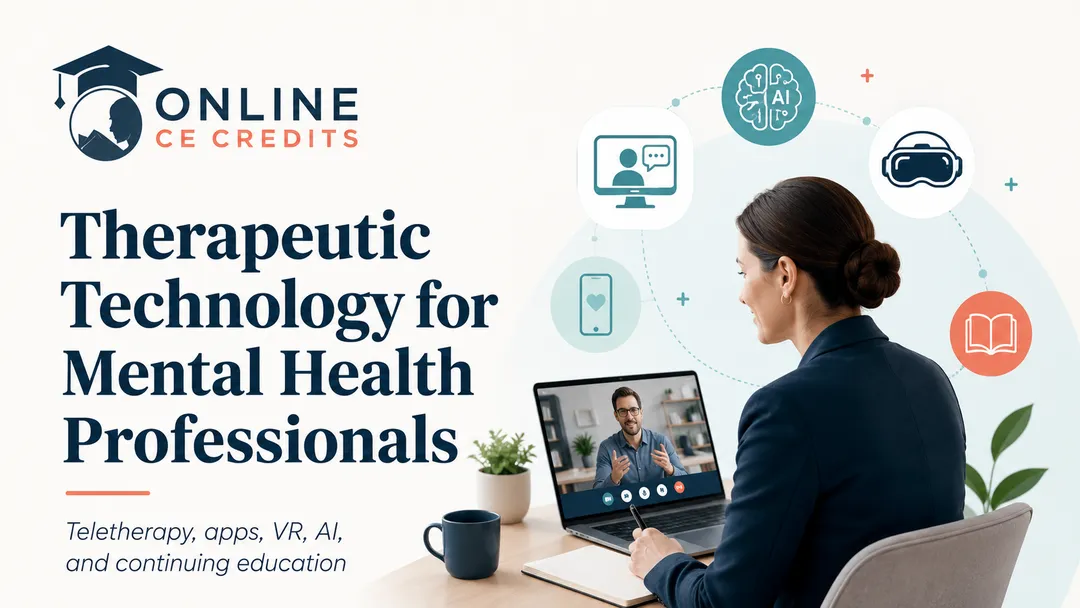
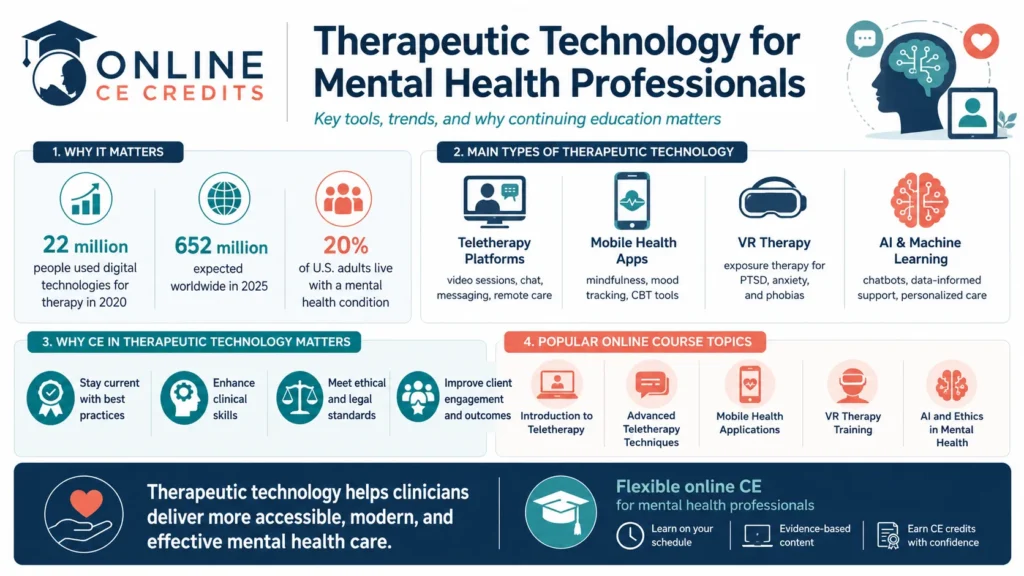
Statista reports that 22 million people used digital technologies for therapy in 2020, and this is expected to rise to 652 million in 2025 worldwide. Also, 20 percent of adults in the U.S. live with some form of mental health condition.
So therapeutic technologies like mobile health apps are needed more than ever to provide accessible, real-time mental health interventions. And mental health professionals should stay current with these advancements through online courses.
Here’s what you need to know:
Key Highlights
1. Therapeutic technology is in high demand due to the increasing need for accessible mental health interventions.
2. Online courses in therapeutic technology offer a convenient and affordable way for mental health specialists to improve their skills and stay updated with industry trends.
3. Therapeutic technology encompasses teletherapy platforms, mobile health apps, virtual reality therapy, artificial intelligence, and machine learning tools.
4. Continuing education in therapeutic technology is essential for staying current with best practices.
5. Online CE Credits offers diverse certification programs managed by therapists and available online 24/7 at a fraction of the cost, without due dates or deadlines.
6. Continuing education helps therapists stay relevant by keeping them up-to-date with the latest tools and methodologies and providing hands-on training.
★ Recommended Course for This Topic
Discernment Counseling and Separation Decisions for Couples
Approved
✓ Board Approved
Credits
3.0 CEUs
Format
Online + Instant Quiz
Price
$90
Get Credits Now →
Instant certificate · 100% online · Accepted by most state licensing boards
Now, let’s dig deeper into digital technologies for therapy to help you level up your knowledge and expertise.
What Are the Types of Therapeutic Technology?
Therapeutic technology covers a range of tools and applications that support and enhance mental health treatment.
Here are some examples:
Teletherapy Platforms
Teletherapy, also called online therapy, e-counseling, or e-therapy is when you offer mental health services and client support over the Internet. Health service providers can interact with clients through:
- Text messaging
- Online chat
- Video conferencing
- Email
- Internet phone
- Messaging
It has become a mainstay in mental health services, especially since the COVID-19 pandemic. Platforms like BetterHelp, Talkspace, and Thera-LINK provide secure, user-friendly interfaces for remote sessions. This has made therapy accessible to individuals who might otherwise face barriers such as geographic distance or mobility issues.
Mobile Health Apps
As the name speaks for itself, mobile health apps enable users to connect with health professionals anywhere, anytime. For example, Headspace, Calm, and Moodpath offer clients tools for mindfulness, meditation, mood tracking, and cognitive-behavioral therapy (CBT) exercises.
The tools provide supplementary support between sessions, empowering clients to be active in their mental health management.

Virtual Reality (VR) Therapy
VR therapy employs virtual world technology in a computer-generated or 3-D environment to provide occupational or psychological therapy. VR therapy is also known as simulation for therapy (SFT), virtual immersion therapy (VRIT), virtual exposure therapy (VRET), or computerized CBT (CCBT).
It’s an emerging field that is believed to treat conditions like PTSD, anxiety disorders, and phobias. Tools like Limbix and Psious offer controlled, therapeutic environments where clients can confront and manage their symptoms in a safe space.
Artificial Intelligence (AI) and Machine Learning
AI-driven tools are also modifying diagnostic processes and personalized treatment plans. For example, AI chatbots can break down barriers like stigma, costs, therapist availability, and access.
And platforms like Woebot and Ellie (an AI therapist developed by the University of Southern California) provide automated, intelligent interactions that support clients and gather valuable data to inform human therapists.
Embrace Therapeutic Technologies
Wondering how you can take advantage of therapeutic technology to boost your skills in mental health treatments? You’re in luck. Online CE Credits has diverse certification programs that are therapist-managed and available online 24/7 at a fraction of the cost.
No due dates. No deadlines. All the lessons are self-paced, and you can complete them from the comfort of your home.
Why Continuing Education in Therapeutic Technology Is Essential
Because technological advancements change rapidly, mental health practitioners must commit to lifelong learning to stay relevant.
Here are key reasons why CE in therapeutic technology is vital:
Staying Current with Best Practices
New technologies continually emerge, each promising to improve therapeutic outcomes. CE courses ensure practitioners are up-to-date with the latest tools and methodologies. This enables them to integrate industry standards into their clinical work.
Enhancing Clinical Skills
Technological proficiency is becoming an essential skill set for therapists. CE courses provide hands-on training and practical knowledge, enabling therapists to incorporate new tools effectively into their practice. For example, certification programs like PTSD therapy and advanced EMDR can boost your skills in trauma-related cases.
Meeting Ethical and Legal Standards
Using technology in therapy raises unique ethical and legal considerations, such as confidentiality, informed consent, and data security. CE programs offer guidance on how to manage these issues, helping therapists maintain compliance with professional standards.
Improving Client Engagement and Outcomes
Technological tools can promote client engagement by providing interactive, user-friendly platforms for therapy. CE certification programs equip therapists with strategies to cash in on the tools’ therapeutic benefits for better client results.
What Are the Types of Online Courses?
Online CE courses in therapeutic technology are extensive, catering to various interests and specializations. Here are some popular courses:
Introduction to Teletherapy
These courses cover the basics of conducting therapy sessions online, including platform selection, setting up a virtual office, and managing technical issues. They also explore techniques to build rapport and maintain a therapeutic presence in a virtual environment.
Advanced Teletherapy Techniques
Building on introductory courses, these classes expand more on teletherapy, such as integrating multimedia resources, conducting group therapy online, and addressing specific clinical issues like trauma and anxiety in a virtual setting.
Mobile Health Applications
Courses on mobile health apps provide an overview of the most effective tools available, instructions on how to recommend and monitor their use, and strategies for integrating app-based interventions into treatment plans.
VR Therapy Training
These specialized courses teach therapists to use VR technology in clinical practice, including setting up VR equipment, selecting appropriate therapeutic scenarios, and monitoring client responses during VR sessions.
AI and Machine Learning in Mental Health
Courses in this area introduce therapists to AI-driven diagnostic and treatment tools. They cover topics like understanding machine learning algorithms, interpreting AI-generated data, and ethically integrating AI tools into practice.
Ethics and Legal Issues in Therapeutic Technology
These courses focus on unique ethical and legal challenges posed by therapeutic technology. Topics include maintaining client confidentiality in digital interactions, securing informed consent, and understanding the regulatory landscape.

What Are the Benefits of Online CE Courses?
Online CE courses offer numerous advantages, making them an attractive option for busy mental health therapists:
Flexibility and Convenience
Online programs allow therapists to learn at their own pace and on their own schedule. This flexibility benefits practitioners juggling busy caseloads and personal commitments.
Access to Expert Instructors
Online courses provide access to cutting-edge knowledge and insights from leading experts in the field. Participants can benefit from the expertise of renowned professionals without having to travel or take time off work.
Diverse Learning Formats
Internet courses often use various learning formats, including video lectures, interactive modules, discussion forums, and live webinars. This diversity caters to different learning styles and enhances the overall educational experience.
Networking Opportunities
Attendees have ample opportunities to network while doing online training. Discussion forums, live Q&A sessions, and group projects enable them to connect with peers and build professional relationships.
Cost-Effective Learning
Online programs are more affordable than in-person training since they eliminate travel, accommodation, and conference expenses. Many platforms also offer payment plans and financial aid options.
How Do I Choose the Right Online CE Course?
Selecting the right online CE course can be daunting with so many options. Here are some tips to help you make an informed decision:
Identify Your Learning Goals
Start by identifying what you hope to achieve from the course. Are you looking to master a specific technology, enhance clinical skills, or fulfill licensure requirements? Clear goals will guide your course selection.
Research Course Providers
Choose courses from reputable providers with a track record of delivering high-quality education. Look for accreditation by professional organizations and positive reviews from past participants.
Evaluate the Course Content
Review the course syllabus and content outline to ensure it covers the topics you’re interested in. Check for a mix of theoretical knowledge and practical applications, and look for opportunities to engage with instructors and peers.
Consider the Learning Format
Ensure the course format suits your learning style and schedule. If you prefer live interaction, look for courses with live webinars and Q&A sessions. If you need flexibility, opt for self-paced programs.
Check for Continuing Education Credits (CEU)
Ensure the course provides CE credits recognized by your licensing board. This is crucial for meeting licensure renewal requirements and ensuring the course is professionally valuable.
Continue Your Learning
Recommended Courses
✓ Board Approved
Trauma Treatment Without Retraumatization: Ethical Considerations
3.0 CEUs · Online + Instant Quiz
✓ Board Approved
Acceptance as Change: The Power of ACT and DBT Combined
5.25 CEUs · Online + Instant Quiz
Jumpstart Your Mental Health Therapeutic Knowledge with OnlineCECredits
Therapeutic technologies are here to stay and can upgrade your therapy skills faster and cheaper to enable you to better serve your clients. Thankfully, Online CE Credits offers a diverse, up-to-date therapeutic training program, catering to your individual needs as a busy mental health professional.
Our experienced experts cover topics in-depth, from teletherapy to AI-driven tools. They ensure you learn about the latest advancements and best practices in the field. Online CE Credits is your go-to resource for CEU in therapeutic technology because of its flexible learning formats, accredited CE credits, and practical, actionable content. Choose your course today!
Have You Signed Up For An Account?
Starting your journey toward earning an accredited CEU program in mental health is a breeze with Online CE Credits. You can pay in installments, make a once-off payment, or take on a membership plan. The best part? Individual fully-paid course bookings are 100% RISK-FREE for 24 hours, quality-guaranteed. Stop thinking you need more time to decide to upskill yourself. Create your account to get started!
