
The Pain Protocol, a specific application within Eye Movement Desensitization and Reprocessing (EMDR) therapy, offers a targeted approach for addressing chronic pain, an area often overlooked or underestimated in its psychological impact.
Want to help your clients manage chronic pain? Enroll in an EMDR certification program from continuing education experts without breaking the bank.
What Is the EMDR Pain Protocol?
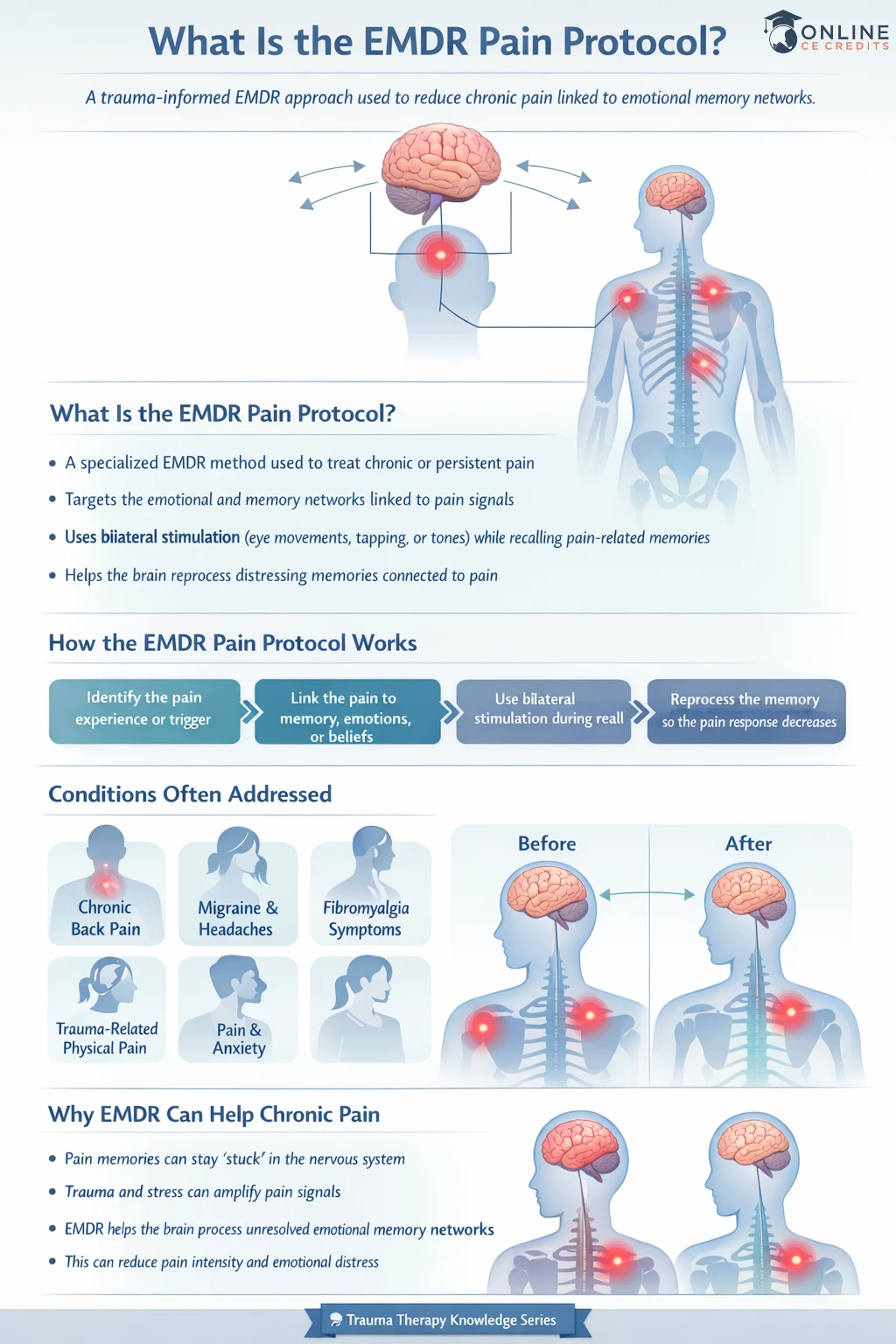
The EMDR Pain Protocol is a specialized adaptation of Eye Movement Desensitization and Reprocessing (EMDR) therapy designed to help clients process and reduce chronic pain. The approach was developed by psychologist Mark Grant, who recognized that persistent pain often becomes connected to emotional memory networks in the brain. In many cases, pain is not maintained only by physical injury but also by unresolved trauma, fear, stress, or distress associated with the original pain experience.
The Pain Protocol is one of several ways EMDR has been adapted around a specific clinical target. Another example is the DeTUR protocol, which focuses on triggers, cravings, urge states, and dysfunctional behaviors.
Traditional EMDR focuses on traumatic memories that continue to trigger psychological distress. The Pain Protocol extends this framework by targeting the sensory, emotional, and cognitive components of pain itself. Instead of processing only a traumatic event, therapists work directly with the client’s current pain sensations, pain memories, and the emotional meaning attached to those sensations.
In this model, chronic pain is understood as a stored memory network that can include physical sensations, distressing emotions, negative beliefs, and body-based responses. For example, someone who experienced a severe injury may continue to feel pain long after the tissue has healed because the nervous system still associates certain sensations with danger. By using bilateral stimulation and structured EMDR processing, therapists help clients reprocess these pain-related memories so the brain no longer interprets the sensations as threatening.
The goal of the EMDR Pain Protocol is not to dismiss the physical reality of pain but to address the psychological and neurological processes that can intensify or prolong it. Many clients report that after processing pain memories and associated distress, their pain becomes less intense, less frequent, or easier to manage. For therapists working with clients who experience chronic pain, injury-related pain, or medically unexplained symptoms, the EMDR Pain Protocol offers a structured way to integrate trauma-focused therapy into pain treatment.
Why EMDR for Pain?
According to the U.S. Pain Foundation, nearly 21% of American adults, 51.6 million, suffer chronic pain that lasts over three months. Among them, 17.1 million suffer from severe chronic pain that substantially hinders their ability to work or participate in daily activities.
Traditional pain management techniques primarily address physical symptoms but may neglect the emotional and cognitive components. EMDR therapy, known for its effectiveness in trauma treatment, can bridge this gap by directly targeting the distress associated with chronic pain.
The EMDR Pain Protocol is not about diminishing or ignoring the physical aspect of pain but rather about addressing the psychological factors that exacerbate or maintain pain. Many clients with chronic pain report significant improvements in their pain perception and emotional well-being after undergoing EMDR treatment.
Understanding the Connection Between Pain and Trauma
Many therapists encounter clients who have experienced trauma, whether it’s related to a specific event or accumulated over time. These traumas often manifest physically, contributing to chronic pain.
For instance, a client with a history of abuse might develop chronic back pain with no clear medical explanation. The pain persists, and traditional treatments provide little relief. This scenario is where the EMDR Pain Protocol can make a substantial difference.

When using EMDR for pain, you’re not just treating the pain itself but exploring the deeper, often hidden emotional roots that may be fueling the pain. These roots could include past trauma, unresolved grief, or even current stressors that the client hasn’t fully processed.
The EMDR Pain Protocol Steps
While the EMDR Pain Protocol follows the core principles of EMDR therapy, it places greater emphasis on body awareness and pain-related memory networks.
The process guides clients through structured stages that allow them to safely process both the emotional and sensory components of chronic pain.
1. Pain Identification
The process begins by identifying the client’s current pain experience. The therapist asks the client to describe the location, intensity, and quality of the pain, as well as any emotions or thoughts connected to it. Clients may rate their pain on a scale and describe how it changes throughout the day. This step helps establish a baseline for measuring progress during treatment.
2. Identifying Pain-Related Memories
Next, the therapist explores whether the pain is connected to a specific event, injury, or emotionally significant experience. Sometimes the connection is obvious, such as pain that began after an accident or surgery. In other cases, the therapist helps the client identify earlier memories or emotional experiences that may be linked to the body’s pain response.
3. Targeting the Pain Experience
Once a target memory or pain sensation is identified, the client focuses on the pain while noticing the emotions, body sensations, and beliefs associated with it. For example, a client may hold a belief such as “My body is broken” or “This pain will never stop.” These beliefs often reinforce the distress connected to the pain.
4. Bilateral Stimulation and Desensitization
The therapist then introduces bilateral stimulation, such as guided eye movements, tapping, or auditory tones. While focusing on the pain or related memory, the client allows thoughts, sensations, and emotions to arise naturally. Over time, the brain begins to process the experience differently, and the intensity of both the emotional distress and the physical pain may begin to decrease.
5. Installation of Positive Cognitions
After the distress connected to the pain target has been reduced, the therapist works with the client to install a more adaptive belief. Examples might include “My body can recover,” “I can cope with this,” or “I am safe now.” Strengthening these positive cognitions helps shift how the client interprets their physical sensations.
6. Body Scan
The client then scans their body for any remaining tension, discomfort, or pain. If new sensations appear, these can become additional targets for processing. This step ensures that unresolved somatic distress does not remain in the body.
7. Future Template and Integration
Finally, the therapist helps the client imagine responding to future pain triggers with a calmer and more adaptive response. This step prepares the nervous system to handle future sensations without automatically activating fear or distress.
By following these steps, therapists can help clients reprocess pain-related memory networks, reducing both the emotional distress and the physical intensity of chronic pain. Over multiple sessions, this structured approach can help clients develop a healthier relationship with their bodies and regain a greater sense of control over their pain experience.
Challenges in the EMDR Pain Protocol
Integrating the EMDR Pain Protocol into your practice isn’t without its challenges. Some clients may experience an initial increase in pain as they begin to process trauma. It’s important to prepare them for this possibility and provide reassurance that this is part of the healing process. Additionally, clients with a strong attachment to their pain as part of their identity may resist the changes that EMDR can bring. In these cases, gentle exploration of the underlying reasons for this attachment can be beneficial.
Another challenge is managing client expectations. While EMDR can lead to significant improvements, it’s not a quick fix. Chronic pain, especially when tied to deep-seated emotional issues, may require several sessions before noticeable changes occur. Educating clients about the process and setting realistic goals can help maintain motivation and engagement.
Tailoring the Protocol to Individual Needs
Every client’s experience of pain is unique, as are the emotional and psychological factors contributing to it. This individuality requires therapists to be flexible and creative in their application of the EMDR Pain Protocol. Some clients might benefit from more extensive body-focused work, while others may need to spend more time processing specific memories or events.
For example, a client with fibromyalgia may experience widespread pain with no clear origin. In such cases, focusing on the emotional impact of living with chronic illness, the frustration of dealing with unexplained symptoms, and any associated traumas can be more effective than trying to target the pain itself. On the other hand, a client with a clear traumatic event linked to their pain, such as a surgery gone wrong, may benefit from a more direct approach, focusing on the memory of the event.
Incorporating EMDR Pain Protocol With Other Therapeutic Approaches
EMDR therapy is often most effective when used in conjunction with other therapeutic approaches. For clients with chronic pain, combining EMDR with Cognitive Behavioral Therapy (CBT) or mindfulness techniques can enhance the overall effectiveness of the treatment. CBT can help clients reframe negative thoughts about their pain, while mindfulness practices can increase body awareness and reduce stress, both of which can complement the EMDR process.

For example, a client who tends to catastrophize their pain experience might benefit from CBT techniques that challenge these thoughts, alongside EMDR sessions that target the emotional roots of their pain. Mindfulness practices, such as guided body scans or breathwork, can also be introduced in EMDR sessions to help clients stay grounded and connected to their bodies.
Dominate Your Practice With Evidence-Based Therapies
Level up your therapeutic practice with our data-backed CE courses. Gain expertise in cutting-edge techniques like Schema-Focused CBT, anxiety disorder treatment, culturally sensitive grief therapy, and resilience building. Equip yourself to address a wide range of mental health challenges and make a profound difference in your clients’ lives. Enroll today and unlock your full potential as a therapist.
- Schema-Focused CBT: Rooting Out Resistant Behavior Patterns
- Diagnosis and Treatment of Anxiety Disorders
- Treating Grief-Stricken Clients: Culturally Sensitive Interventions
- Resilience and Post-Traumatic Growth: Healing from Loss and Trauma
The Role of Ongoing Training and Supervision
Therapists interested in integrating the EMDR Pain Protocol should consider seeking specialized training and supervision. Working with chronic pain requires a deep understanding of both the physical and psychological aspects of pain, and ongoing education can help ensure that you’re providing the most effective treatment possible.
Supervision is particularly valuable when first implementing the Pain Protocol. Discussing cases with a supervisor or peer group can provide new perspectives, highlight areas for improvement, and offer support as you navigate challenging cases.
Embrace the EMDR Pain Protocol To Enhance Your Therapy
The EMDR Pain Protocol is a powerful tool that can significantly enhance the treatment of clients with chronic pain. By addressing the emotional and psychological components of pain, therapists can offer a more holistic and effective approach to pain management. Integrating this protocol into your practice requires a commitment to understanding the complex relationship between trauma and pain, as well as a willingness to tailor the approach to each client’s unique needs.
With careful implementation, the EMDR Pain Protocol can lead to meaningful and lasting relief for your clients. Ready to upgrade your practice? Enroll now to learn more about how our accredited courses can benefit your therapy.
